 |
siderust-cpp 0.8.0
Header-only C++ wrapper for siderust
|
|
siderust-cpp 0.8.0
Header-only C++ wrapper for siderust
|
Abstract base class for all celestial targets. More...
#include "altitude.hpp"#include "azimuth.hpp"#include "coordinates.hpp"#include "time.hpp"#include <memory>#include <string>#include <vector>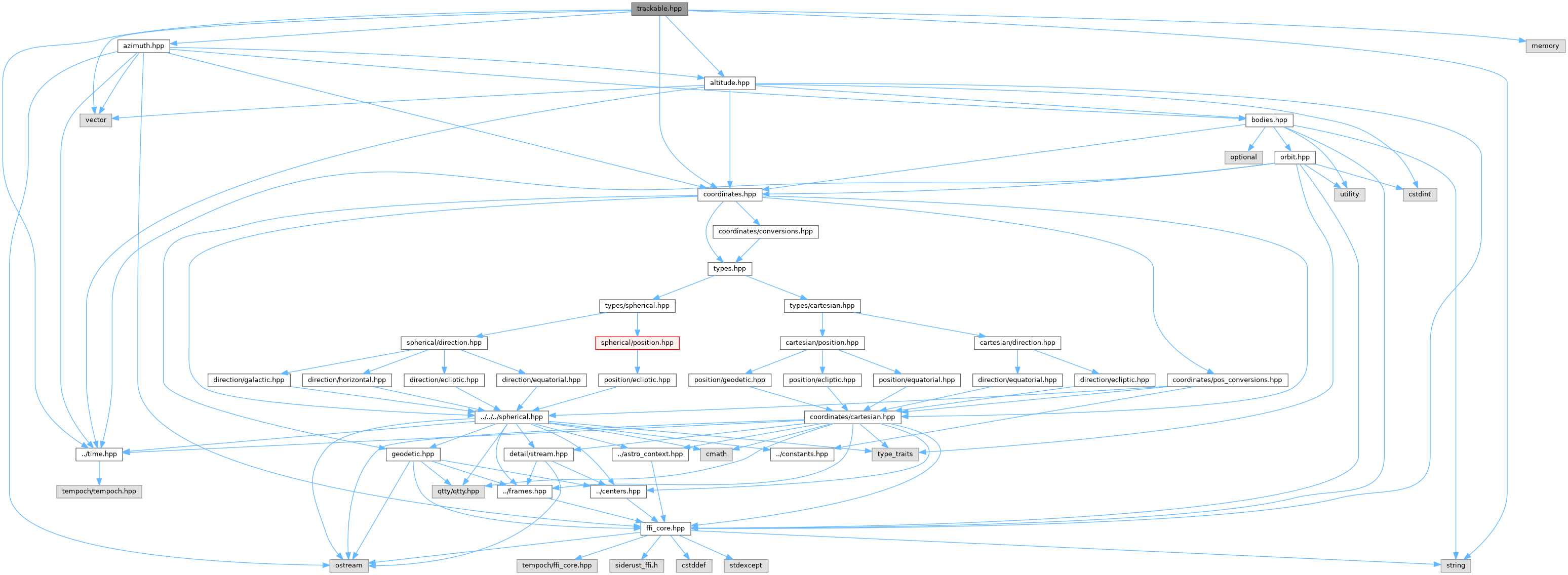
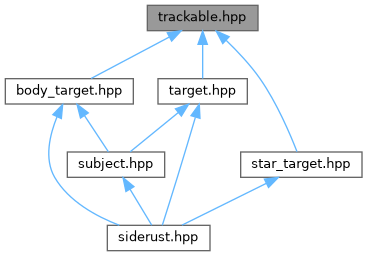
Go to the source code of this file.
Classes | |
| class | siderust::Target |
| Abstract base for any celestial object that can be tracked from an observer location. More... | |
Namespaces | |
| namespace | siderust |
Typedefs | |
| using | siderust::Trackable = Target |
Backward-compatible alias. Prefer Target in new code. | |
Abstract base class for all celestial targets.
Target is the unified concept for anything in the sky that can be pointed at from an observer location. Concrete implementations cover:
ICRSTarget, etc.Star catalog objectsEvery Target carries a human-readable name(). Use std::unique_ptr<Target> to hold heterogeneous collections.
Definition in file trackable.hpp.
 1.9.8
1.9.8